
What If a Virus Targeted Only One Chromosome?
When I first sat down to imagine the world of The Chromosome Trilogy, one question kept circling in my mind: what if a virus didn’t affect everyone equally? What if it was written into our very DNA who lived, who mutated, and who died?
It’s the kind of unsettling thought experiment that dystopian fiction thrives on. We’ve seen in real life how pandemics can shift societies almost overnight, but mine takes a darker turn — a virus that only attacks one specific chromosome. In the trilogy, it’s the Y chromosome, leaving devastating consequences for humanity.
Could it really happen?
Scientists already know that certain genetic markers can make people more vulnerable to disease. Conditions like cystic fibrosis or sickle cell disease are passed down through our DNA, while even common viruses like influenza can hit some groups harder than others. In theory, a virus designed to exploit a single chromosome is not impossible — though thankfully, we’re nowhere near creating something that precise in reality.
Fiction rooted in possibility
That’s the sweet spot for me as a writer: a story that feels just close enough to real science to unsettle the reader. We might not have a chromosome-specific virus lurking in the shadows, but history shows how quickly a new disease can spread and reshape society. Thinking about that fragility is what gave The Chromosome Trilogy its pulse.
Why it matters to the story
A virus that doesn’t play fair raises huge questions about survival, inequality, and power. Who controls the cure? Who gets to decide whose lives are worth saving? And how do ordinary people find love, loyalty, and hope when the very building blocks of humanity are under attack?
Those are the questions I wanted readers to wrestle with as they follow my characters’ journey — because dystopias aren’t really about the end of the world. They’re about how we choose to live when the world changes.
👉 Curious to see where this “what if” leads? Start the journey with Mutate, book one of The Chromosome Trilogy.
5 Dystopian Books That Make You Question the Future
Dystopian fiction has always asked the big what if questions: what if our governments went too far, our technology outgrew us, or our freedoms slipped quietly away? These stories don’t just entertain — they challenge us to reflect on the choices we’re making today and where they might lead.
Here are five powerful dystopian books that will make you stop and think about the future:
1. 1984 by George Orwell
A chilling classic that gave us “Big Brother” and the concept of thoughtcrime. Orwell’s vision of a surveillance state feels unnervingly close in an age of smartphones, data tracking, and constant connectivity.
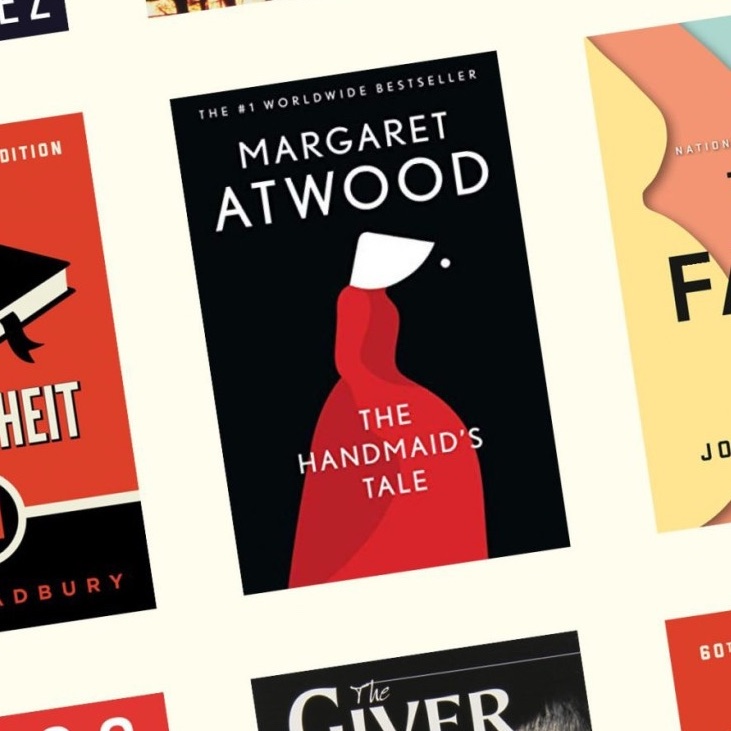
2. The Handmaid’s Tale by Margaret Atwood
Atwood’s tale of a society where women’s rights are stripped away is a stark reminder of how fragile freedoms can be. It forces us to think about power, gender, and the dangers of silence.
3. Brave New World by Aldous Huxley
Unlike Orwell’s bleak authoritarianism, Huxley shows a world where people are controlled not by fear, but by pleasure, distraction, and genetic manipulation. It asks: would we even notice if we gave up our freedom willingly?
4. The Hunger Games by Suzanne Collins
This modern YA phenomenon explores inequality, propaganda, and rebellion through a fight-to-the-death competition. Beyond the action, it challenges us to ask: how much of our own world mirrors the Capitol and the Districts?
5. Station Eleven by Emily St. John Mandel
A hauntingly beautiful look at life after a devastating pandemic. It’s less about destruction and more about what it means to preserve art, memory, and humanity in the ruins of the old world.
Why these books matter
Each of these stories holds up a mirror to society. They don’t just imagine bleak futures — they make us ask questions about today. What freedoms do we take for granted? What divides do we ignore? And what kind of world are we building for the generations to come?
That’s why I write dystopian fiction too. My own series, The Chromosome Trilogy, starts with a single terrifying “what if”: what if a virus attacked only one chromosome? From that spark grows a story of survival, sacrifice, and love in a broken world.
👉 If you enjoy thought-provoking dystopias, you can begin my trilogy with Mutate, book one of The Chromosome Trilogy.
 Hetty Waite Author